
The Best TV Shows on Las Estrellas
Every Las Estrellas Show Ranked From Best To Worst
Las Estrellas has delivered an expansive roster of over 20 shows, dating from 1973 all the way to 2024. El Chavo del Ocho and El Chapulín Colorado represent the pinnacle of Las Estrellas’s programming, launching in 1973 and 1973. Stay up-to-date with over 20 of Las Estrellas’s elite series, with our list refreshed for October 2026.
 Mundo de Juguete (1974)9.0
Mundo de Juguete is a telenovela produced in Mexico by Televisa in 1974. It is a remake of telenovela Papá Corazón. This telenovela holds the record for having the second longest run ever for a Latin American telenovela, with a total of 605 episodes. Most telenovelas run for an average of six to eight months; the shortest ones run about four months, and the longest up to a year. Many "Mundo de Juguete" fans believe that either all or some of the tapes and film from the telenovela were lost when Televisa collapsed during the 1985 earthquake. Televisa has been secretive regarding which tapes were lost during that earthquake, so there is no way of confirming this. However, such claims can be disputed, considering that the Telenovela has been repeated on television several times after 1985. During the nineties, it was repeated on Mexico City Canal 9. For a period of time, it was also shown on Unicable or on Telenovelas Televisa remade the telenovela in 2000, and called it "Carita de Angel".
 Rebelde (2004)8.4
A group of young adults will spend their adolescence at the Elite Way School, where they will learn about love, life and live their passion for music.
 Chespirito (1980)8.2
 Vecinos (2005)8.2
The everyday life of people in Mexican neighborhoods, where anything can be found. Each episode interacts between these peculiar neighbors, where they encounter real and fictitious problems.
 El Chavo del Ocho (1973)8.1
The mishaps of Chavo, an 8-year-old Mestizo-Latino American orphan boy who lives in a village. Together with Quico, Chilindrina, Ñoño and La Popis, Chavo experiences a series of humorous entanglements.
 El Chapulín Colorado (1973)8.1
 Laws of love (2018)8.1
The story of two lawyers specializing in family law, Ricardo and Alejandra, that despite coming from two disappointments and being in a world where it seems that love loses strength, before so much divorce, they still have faith in finding true love.
 Clase 406 (2002)8.0
The realistic chronicles of a working class group of Hispanic youth, with heavy subject matter like sex, drug dealing, teen pregnancy, abuse, drinking, rape, deception, and heartbreak.
 La fea más bella (2006)8.0
Leticia Padilla Solís, “Leti”, is an intelligent but unattractive girl, rather ugly. She graduated with honors in economics, speaks several languages, is fluent in computers, and is a financial genius. Only, because of his physique, she can't find work. Desperate to find a job, “Lety” decides to accept being hired below her level and takes a job as a secretary at Conceptos, a famous video production company, where ugliness is taboo. The production company “Conceptos” was founded by two good friends: Don Humberto Mendiola, and Julián Villaroel. Unfortunately, shortly after, the Villaroels die in an accident and Don Humberto and his wife Teresita take care of the Villaroels' orphaned children: Ariel, Marcia and Ana Leticia and the successful company.
 Alma de Hierro (2008)7.8
Alma de Hierro is a 2008–2009 Mexican telenovela produced by Televisa. It is a remake of the Argentinian soap opera Son de Fierro, with the character's names rewritten and adapted to the Mexican audience. The main actors were Blanca Guerra, Alejandro Camacho, Christian Vega, Flavio Medina, Lisardo and Alejandra Barros, with Jorge Poza, Zuria Vega, Adamari López, Angelique Boyer, Eddy Vilard, Martha Julia and Luz María Aguilar playing supporting roles. The show earned 8 awards at the "TV y Novelas" award celebration, becoming the highest-awarded production of the 2009 season.
 Por ella soy Eva (2012)7.8
A handsome man, unjustly accused, transforms into a woman named Eva to win over Helena—the love of his life—and unmask the true culprits behind a financial fraud and the theft of Helena's project.
 Distilling Love (2007)7.7
A romance blossoms between a young country woman and the grandson of the late owner of a tequila company. The young man promises to return and marry his girlfriend once he finishes his studies abroad, unaware that she has become pregnant.
 As the Saying Goes (2011)7.7
Dramatization of real-life situations and stories that are related to popular sayings, by Don Tomas.
 Una familia con suerte (2011)7.7
A Mexican telenovela based on the Argentinean telenovela Los Roldán.
 El amor no tiene receta (2024)7.6
Paz Roble, a kind, hard-working and honest woman from whom her husband, Fermín, takes her newborn daughter. Fermín has a large debt with some lenders and to pay it he decides to sell his daughter to Mauro Nicoliti. This plagiarism is orchestrated by Geneva, Mauro's adoptive sister. She lost her first-born daughter in childbirth and does everything to replace her dead daughter and keep her husband's fortune. On the other hand, Esteban Villa de Cortés loses his wife and becomes a widower with his three children. Elvira Moncada, Esteban's mother-in-law, holds him responsible for the death of her daughter. After a series of unexpected events, Esteban and Paz meet in the neighborhood where she lives with her family. The chemistry and great understanding that exists between them makes it inevitable that they will fall in love.
 Don't Mess with the Angel (2008)7.5
When Marichuy was born, her mother—believing she was on the verge of death—handed her over to a priest, who took her to an orphanage. At the age of fourteen, Marichuy ran away from the institution and began wandering from place to place, scraping together a living however she could. Years later, she was attacked by a drunkard; the incident left her harboring resentment toward men and plagued by harrowing nightmares.
 Burning for Revenge (2008)7.5
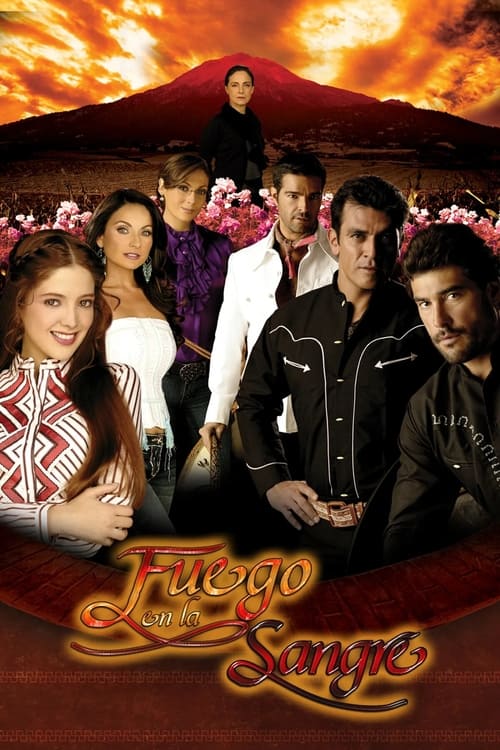
Fuego en la sangre is a telenovela that began transmissions on January 21, 2008, through Mexico's Canal de las Estrellas network. Starring Adela Noriega, Eduardo Yáñez, Diana Bracho, and Guillermo García Cantú. It is the Mexican remake of the Colombian soap operas Las Aguas Mansas and Pasion de Gavilanes. The theme song called "Para Siempre" is sung by Vicente Fernández. The telenovela received TVyNovelas Award for Best Telenovela, in 2009.
 Chispita (1982)7.3
The story follows Isabel—known as "Chispita"—who was separated from her mother after the latter lost her memory in an accident. After growing up in an orphanage, Isabel is adopted by a widowed businessman, Don Alejandro; he hopes she will bring joy to the life of his daughter, Lili, who has become sad and ill-tempered since her mother's death—largely due to the influence of her teacher, the wicked Miss Irene. However, contrary to Alejandro's expectations, Isabel is not welcomed by his daughter; instead, she must contend with the malicious traps set for her by Lili and Miss Irene. Yet, Isabel also finds friends in the household, such as Juan Carlos (Lili’s older brother) and Gloria (the family’s maid). From her new home, Chispita begins the search for her mother.
 La rosa de Guadalupe (2008)7.1
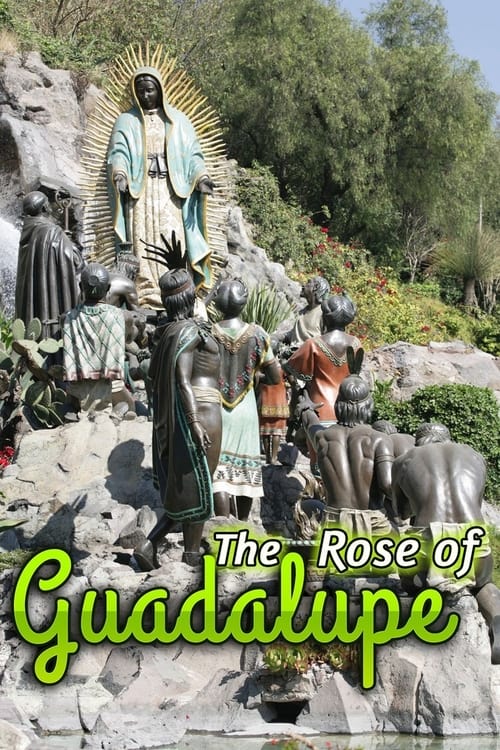
Stories about people who get into problems who use the help of Virgin Mary and where a rose appears and their problems are solved.
 Vivir enamorada (1982)7.0